Office air utilized to be about temperature level problems and the occasional scorched popcorn. Over the last years, a quieter issue has actually insinuated: vaping in toilets, stairwells, conference room, and even at desks. It typically goes undetected by supervisors, however not by colleagues who sit close by, share the exact same ventilation, or have breathing issues.
Vape-free zones are becoming a major topic in occupational safety discussions, not just in school safety meetings. Employers are browsing a mix of changing standards around electronic cigarettes, brand-new local policies, and employee expectations for healthy workplaces. At the same time, sensor technology has advanced to the point where nicotine detection is no longer science fiction. You can now tie a vape sensor into an indoor air quality monitor, a wireless sensor network, or perhaps an access control system.
The challenge is less about whether it is technically possible, and more about how to do it in a manner that works, fair, and considerate of worker privacy.
This is where wise nicotine detection systems, when thoughtfully deployed, can help.
Why offices are reevaluating vaping
Most companies already prohibit cigarette smoking inside. Lots of just presumed that policy covered e cigarettes also. Then the complaints started.
In one monetary services workplace I dealt with, HR started getting duplicated reports about a persistent "sweet chemical" smell in one wing. It took weeks to connect the dots: a handful of employees were vaping in the bathroom and periodically at their desks in between customer calls. No emergency alarm system ever triggered, and the standard smoke detector network stayed quiet. Yet 2 colleagues with mild asthma noticed more regular signs, and one ultimately submitted a formal occupational safety complaint.
Situations like this sit at the intersection of a number of concerns.
First, there is employee health. Vaping aerosols may consist of nicotine, particulate matter, unstable organic substances, and in some cases THC. The science on long term pre-owned direct exposure is still evolving, but what we understand suffices to validate caution, particularly for pregnant workers, people with lung illness, and those with cardiovascular risk.
Second, there is efficiency and culture. When some staff members ignore policies, others see. A perception of unequal enforcement erodes trust quicker than almost any composed rule.
Third, there is regulative threat. Many jurisdictions now treat vaping likewise to smoking in indoor air quality guidelines. Overlooking that pattern can backfire during inspections or disputes, particularly if there is a recorded vaping-associated pulmonary injury or similar health incident.
These pressures drive companies to look for practical tools to support vape-free zones, instead of relying on posters and occasional hallway speeches.
How vaping differs from traditional cigarette smoking from a sensing unit's point of view
From a human nose perspective, a cigarette and an electronic cigarette are extremely different. The very same is true for sensors.
Traditional smoke detectors usually respond to one of 2 things: the optical scattering of smoke particles, or the temperature level modification associated with a fire. They are developed to detect combustion, not the aerosol droplets created by a vape.
Vaping aerosols are made up of tiny liquid beads created by quickly heating a mixture that typically consists of propylene glycol, glycerin, flavoring, and sometimes nicotine or THC. Numerous functions make them challenging for classic detectors.
The particle size circulation is various from common smoke, typically smaller sized, and with a various optical signature. The aerosol concentration can surge rapidly and after that dissipate within a few minutes, especially in well aerated offices. Lots of vapes produce almost no visible cloud, particularly more recent "stealth" devices.
Standard smoke detectors were never ever meant to function as vape detectors. In many buildings, a person can vape under a smoke detector without triggering it, especially if they intend vapor downward or exhale into clothing. That is exactly what numerous employees assume, and they are often correct.
So a devoted vape sensor depends on a more comprehensive toolkit than a standard smoke detector, frequently integrating aerosol detection, gas picking up, and machine olfaction design pattern recognition.
What smart nicotine detection systems really sense
The phrase "nicotine sensor" can be slightly deceptive. The majority of released systems in workplaces and schools are not reading nicotine molecules directly in real time. Instead, they presume vaping activity from a combination of signals.
Common components consist of photometric particle sensors that look at how light scatters off aerosol beads, giving a rough size and concentration of particulate matter in the air. These are similar to sensors used in indoor air quality screens or to approximate an air quality index. Vaping generally produces a sharp, short lived spike in particles within a specific size variety that differs from typical dust, printer emissions, or cooking.
Some platforms include semiconductor or electrochemical gas sensing units to try to find unpredictable organic substances that line up with propylene glycol, glycerin, or typical flavoring signatures. This assists separate vaping from an employee spraying fragrance or cleaning spray. A subset of systems try THC detection by tuning for specific VOC patterns related to marijuana items, though these are more variable and context dependent.
Advanced devices layer a software model on top of these raw signals. In rough terms, they practice a form of machine olfaction: gaining from examples of vaping, perfume, spray cleaners, and normal office air, then categorizing new patterns. A vape alarm can then set off just when the likelihood crosses a threshold, instead of whenever air quality briefly worsens.
Some suppliers use the term "nicotine detection" to describe this multi criterion approach due to the fact that nicotine vapes are a primary target, but the sensor is really reacting to the entire aerosol and gas profile. Direct molecular nicotine detection tends to show up more in specialized lab or drug test applications, not ceiling installed workplace hardware.
The outcome, when tuned well, is a gadget that can distinguish between someone burning toast in the break room and someone using an electronic cigarette in the restroom.
Designing a vape-free office: policy before hardware
I have actually seen companies hurry to set up vape detectors before they have a coherent policy. That generally ends terribly. Individuals feel monitored without understanding why, and enforcement ends up being inconsistent.
Before touching sensing unit hardware, a work environment needs a minimum of four policy decisions written in plain language: what counts as forbidden vaping, where the vape-free zones start and end, how enforcement and effects work, and how privacy is protected.
Clarity matters more than strictness. A policy that says "no vaping indoors, consisting of in bathrooms, stairwells, meeting rooms, or shared vehicles" is easier to follow than unclear phrasing like "prevent vaping where it might trouble others." Workers should not need to guess whether an electronic cigarette with no noticeable vapor is allowed in a private office.
Enforcement requires to be practical. A zero tolerance policy that no one in fact imposes creates cynicism. A graduated method, with training on first detection, composed caution on repeating, and ultimate escalation, tends to line up better with work environment norms.
Finally, privacy can not be an afterthought. People will fairly ask: are these gadgets tape-recording audio, video, or determining who vaped? The answer in a well developed system needs to be "no" for audio and video, and "not straight" for identity. The sensor discovers occasions in space and time; individuals choices about who was present take place through normal guidance, not biometric tracking.
Once these questions have honest answers, the technical part of creating vape-free zones ends up being much easier.
Where and how to deploy vape sensors in offices
Placement choices are both technical and political. Purely from a physical picking up angle, you desire sensors where vaping is probably and where airflow will not instantly dilute the aerosol. In genuine workplaces, that typically means bathrooms, secluded corridors or stairwells, specific meeting rooms, and often open plan areas if there is a history of vaping at desks.
Ceiling installing provides a broad detection volume, particularly near ventilation returns. In smaller sized toilets, wall mounting at a height above common head level can balance precision and vandalism risk. In open offices, I have actually seen much better performance from a number of smaller vape sensors distributed around a floor rather than one big device near the elevator lobby.
Wireless sensing unit networks are practical here. Numerous modern-day vape detectors interact through Wi Fi, LoRaWAN, or a proprietary RF link, then aggregate information to a main platform. That minimizes wiring work and enables progressive implementation. If an issue location emerges, centers can move a device or include another node with relatively little disruption.
Integration with existing systems can be powerful however requires restraint. Tying a vape alarm directly into the emergency alarm system is generally a bad idea, because it runs the risk of incorrect evacuations and alarm fatigue. Instead, vape alarms usually go to:
A notice platform for security or facilities staff, often through SMS, email, or a dashboard.
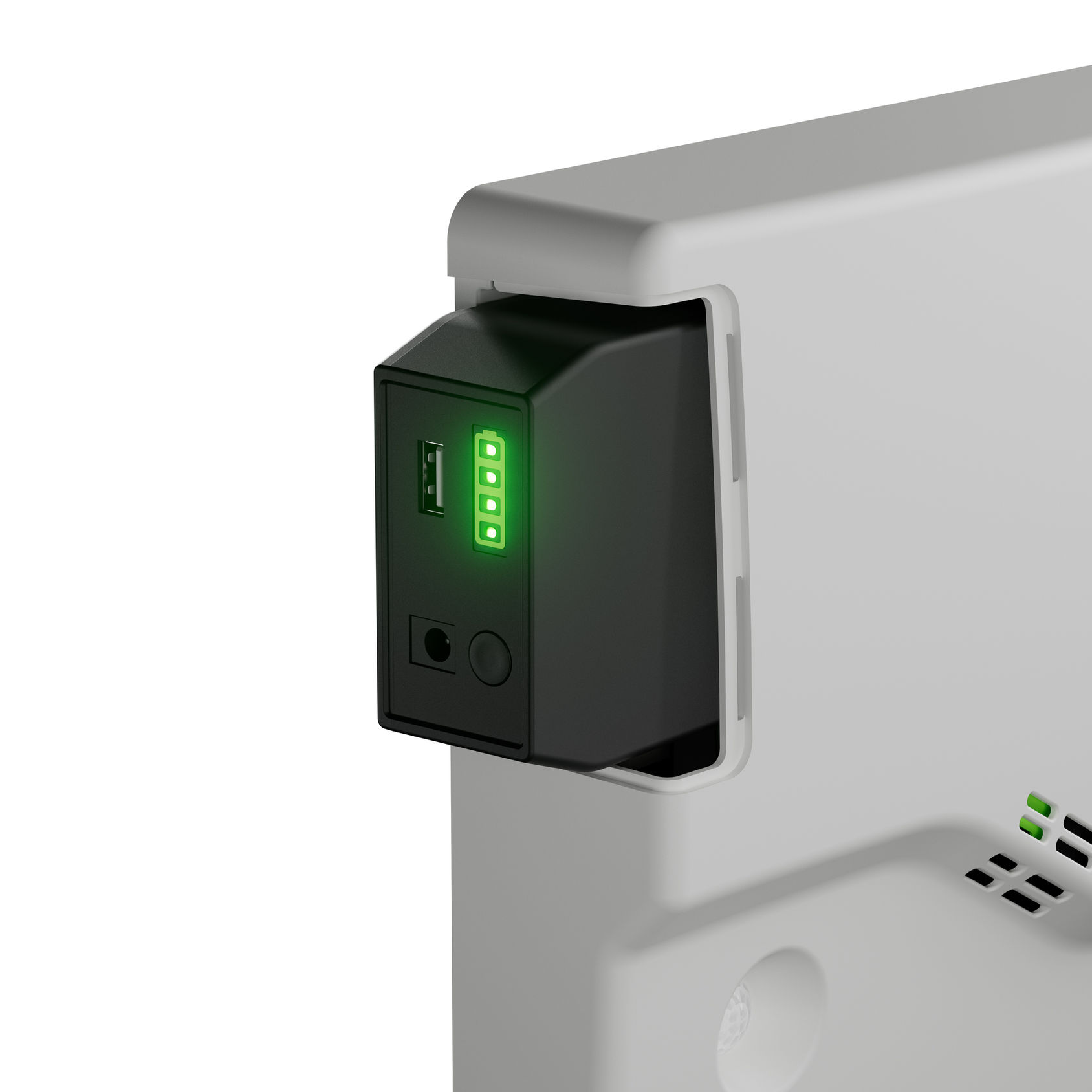
A building management or occupational safety system for trend analysis.
In some high control environments, an access control system to log which gain access to cards were used near a room at the time of repeated events.
That last example is delicate. Utilized moderately, it can help in a laboratory or protected facility where vaping provides unusual threat. Used broadly, it can feel like security and damage trust.
Battery life and upkeep also matter. I recommend organizations to deal with vape sensors like air quality screens: gadgets that require routine calibration checks, cleaning, and firmware updates. Workplace dust or aerosolized cleaning chemicals can gradually move sensor baselines. Neglecting upkeep causes either drift (missed events) or hypersensitivity (continuous annoyance informs).
Distinguishing vaping from normal indoor air pollution
Indoor air quality in offices is unpleasant. You have copier emissions, fragrance, hair products, cleaning sprays, air fresheners, food reheating, and outside air introduced by ventilation systems. An ignorant aerosol detection limit guaranteed to capture every vape will likewise catch every aerosol spray.
The more fully grown approaches depend on pattern acknowledgment and multi parameter picking up, not simply single thresholds.
For example, a common vape occasion in a restroom might reveal as a quick spike in submicron particulate matter, followed by a tail that decays over 3 to 10 minutes, in addition to a moderate increase in particular volatile organic compound signatures. The exact same toilet after somebody sprays an air freshener could show a various particle size circulation, different VOC mix, and a slower decay as droplets settle on surfaces.
You can think of it like a finger print. Systems that have actually been trained with lots of real world examples across schools, offices, and transit environments are better at constructing reputable fingerprints for "vaping" versus "typical contamination."
False positives still occur. A fog machine utilized during an office event can activate whatever. Heavy incense in a meditation room might look like continuous vaping. The repair is not to disable sensing units, however to adjust expectations and limits by place, and to provide personnel a feedback loop to identify apparent false positives. Over a couple of weeks, settings normally assemble to a convenient balance.
From a health viewpoint, that negative effects can be fascinating. Facilities teams often find that locations with duplicated near-threshold vape detections likewise have typically bad ventilation or high particulate levels. The device purchased for vaping prevention becomes a rough indoor air quality sensor too, prompting ventilation tweaks that help everyone.
Lessons from schools that offices can borrow
Much of the real life experience with vape sensors comes from school safety programs. Middle and high schools moved faster than offices due to the fact that student vaping took off almost over night, and conventional supervision merely could not keep up.
Several lessons from that environment rollover to workplace safety quite cleanly.
Message the "why" directly. Schools discovered that when they described nicotine addiction, student health effects, and the rationale behind vape-free zones, moms https://www.wkrn.com/business/press-releases/globenewswire/9649153/zeptive-unveils-settlement-to-safety-program-to-maximize-juul-and-altria-settlement-funds-for-schools-by-2026 and dads and students accepted detectors quicker. Workplaces must do the exact same around employee health, not conceal behind vague phrases like "policy compliance."
Integrate assistance, not simply penalty. Forward looking schools set vape detection with therapy or cessation resources. That spirit matters in workplaces too. Employees who vape indoors are often addicted and worried, not simply defiant.
Avoid overreaction to first events. Many schools found that pulling entire classes out for each alert wreaked havoc. Workplaces that send out building broad messages for every occasion produce the very same tiredness. Quiet, local reactions work better.
Respect adjacent privacy norms. Schools that put detectors in locker rooms or altering areas faced extreme reaction. Likewise, offices require to think thoroughly before positioning sensors in private offices or wellness spaces. Even if the device catches only aerosols, perception matters.
The school environment is more constrained and guideline heavy, yet the exact same human patterns appear in adult work environments. Individuals respond much better when they feel policies have to do with health and fairness, not control.
Balancing detection with trust and privacy
Installing a network of sensing units that can discover habits people mean to hide is never purely technical. The social context figures out whether the system is successful or silently fails.
Employees will ask whether vape sensing units can be used to keep track of other activities, such as THC use or even alcohol. Technically, a device designed for aerosol detection might get specific forms of cannabis vaping, however the uniqueness differs wildly. It will generally not detect someone who used THC gummies at home hours previously. And it will not work as a generalized drug test equivalent for anything beyond vaping in that physical space.
It deserves saying that clearly. Overemphasizing what sensors can do undermines trustworthiness. So does downplaying their capabilities. Openness about constraints constructs more trust than marketing claims or unclear reassurances.
Some organizations select to disable THC detection features, if present, to focus exclusively on nicotine and general vaping. Others in regulated markets, such as labs or transport centers, explicitly include THC vaping in their prohibited list since of safety crucial roles. The key is to document and communicate the choice.
On privacy, an excellent practice package generally consists of:
A clear description of what the sensing units measure and what they do not, in normal language.
An explicit statement that no audio or video is collected.
Access controls on alert information so only pertinent supervisors or security staff see detailed logs.
Reasonable retention limits for detailed event information, with just aggregated statistics kept long term.
When employees understand that a vape detector is similar to a sophisticated air quality sensor, not a hidden video camera with a microphone, resistance typically softens, particularly amongst non vaping employees.
Practical steps for presenting clever nicotine detection
Organizations that handle smooth deployments tend to follow a few pragmatic steps rather than dropping technology overnight.
Here is a basic series that balances technical and human factors:
Map your actual issue, not your concern. Walk the structure, talk with centers, HR, and line supervisors. Identify suspected hotspots and time patterns. Do not assume the issue is all over just because one grievance was loud.
Pilot in a restricted area. Pick a few representative spaces, such as a washroom on each flooring and one or two delicate spaces. Run sensors in a logging mode for a couple of weeks with discreet action, to tune limits and understand standard indoor air quality.
Communicate early and frequently. Discuss to employees why vape-free zones matter for employee health and workplace safety, how the vape sensor network works, and how alerts will be dealt with. Welcome questions and criticism honestly.
Integrate with existing processes, not as a different universe. Route alerts through the very same occupational safety or facilities channels you already utilize for water leakages or air quality grievances. Add vaping prevention resources to wellness programs.
Review and adjust. After 3 to 6 months, examine: have grievances dropped, are incorrect positives manageable, are there any unexpected adverse effects? Be willing to move gadgets, retune limits, or modify policy language.
Organizations that skip the mapping or interaction steps often wind up with pricey hardware that is silently disabled after a couple of months due to the fact that "it was too noisy" or "no one trusted it." The series above is slower, but it sticks.
Looking ahead: from vape alarms to holistic indoor environments
Vape-free zones and clever nicotine detection systems are not isolated patterns. They sit within a broader shift toward actively handling indoor environments through sensor technology and analytics.
In the very same ceiling tile, you may eventually see a cluster of gadgets: a particulate matter sensor for general air quality, CO2 tracking for ventilation adequacy, a combined vape detector for aerosol detection, and maybe a little thermal or occupancy sensing unit to understand space use patterns. Tied together online of things, these devices assist facilities groups preserve both convenience and safety with less guesswork.
From a human viewpoint, the goal is basic: people should not need to pick in between their job and their lungs, whether they are staff members in an office tower or student interns moving in between school and work. Vape-free zones imposed only by posters seldom accomplish that. Vape-free zones backed by clear policy, fair support, and smart, transparent detection stand a better chance.
Handled with care, nicotine detection in offices is not about catching "bad stars." It is another action in dealing with indoor spaces with the seriousness we already use to outside contamination. The air between desks and in washrooms matters just as much as the air outside the front door.
The innovation is all set enough. The real test lies in how thoughtfully organizations select to utilize it.